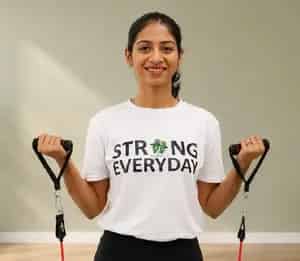
Many older adults in India are told to "just walk" and avoid anything strenuous. Walking is excellent, but on its own it doesn't keep your legs strong enough to climb stairs, get up from the floor or catch yourself if you trip.
Online exercise classes for seniors let older adults build strength and balance at home, at their own pace, without travelling to a gym. This guide explains how to start safely, and how families can support their parents along the way.
- •Muscle declines with age unless it is used. Weak legs make everyday tasks harder.
- •Balance reduces the risk of falls, which are a common cause of serious injury in older adults.
- •Strong muscles support joints, which can make knees and hips feel more comfortable.
- •Bones benefit from load. Strength exercise is widely recommended to help maintain bone strength.
- •Independence: getting up from a chair, using the toilet, carrying shopping and climbing stairs all depend on strength.
The good news: research has long shown that older adults can still build strength with regular, gentle training.
Speak to your doctor before starting if you have any of these:
- •High blood pressure, heart disease or a history of stroke
- •Diabetes, especially with dizziness or low-sugar episodes
- •A knee or hip replacement, or recent surgery
- •Osteoporosis or a recent fracture
- •Frequent dizziness or a history of falls
- •Breathing problems such as COPD or asthma
Ask your doctor which movements to avoid and how hard you can safely work. Keep your usual medicines on time on exercise days.
A chair without wheels, placed against a wall, is the most useful piece of equipment for seniors. It can be used for sitting exercises, for support while standing, and as a target for squats.
For balance exercises, stand close enough to a wall or kitchen counter to touch it if you wobble.
If getting up from the floor is difficult, skip floor exercises until you feel stronger, or do seated versions instead.
Move rugs, wires and small furniture out of the way. Wear well-fitting shoes with good grip, or train barefoot on a non-slip mat.
- •Sit-to-stand: standing up from a chair without using your hands, then sitting down slowly.
- •Wall push-ups: pushing away from a wall to strengthen arms and chest.
- •Heel raises: rising onto your toes while holding a chair, for calves and ankles.
- •Side leg raises: standing and lifting one leg to the side, holding a chair, for hip strength.
- •Seated marching: lifting knees alternately while seated, to warm up and build leg strength.
- •Standing balance: standing with feet close together, then progressing to one foot, while holding support.
Always follow the easier version first, and move slowly.
- •Chest pain, pressure or tightness
- •Dizziness or light-headedness
- •Unusual or severe breathlessness
- •Sharp pain in a joint
- •Blurred vision or confusion
Sit down, rest, and contact a doctor if symptoms don't settle quickly.
Many older adults are willing to exercise but find the technology confusing. A little help makes a big difference.
- 1.Set up the screen. Place the phone, tablet or TV at eye level and show them how to open the class link.
- 2.Do the first few classes together, in person or on a video call.
- 3.Prepare the space: a sturdy chair, a mat, water and good lighting.
- 4.Set reminders on their phone for class time.
- 5.Check in regularly. Ask how they felt, not just whether they attended.
- 6.Talk to their doctor together if they have health conditions.
Exercising with a parent can also become a shared daily routine that both of you look forward to.
Most older adults notice that getting up from a chair, climbing stairs or walking further feels easier within four to eight weeks of regular practice. Balance often improves gradually over two to three months. Progress is slower than in younger people, but it is real and meaningful.
This article is for general information only and is not medical advice. Older adults should get their doctor's approval before starting exercise and stop immediately if they feel chest pain or dizziness.